


Micro motors, widely used in electronic devices, household appliances, medical equipment, and other fields, require a complex and precise production process. Each step directly impacts the motor's performance and quality. Below is a detailed analysis of the micro motor production process and its optimization directions:
1. Raw Material Preparation
The selection and preparation of high-quality raw materials are fundamental to production and directly affect product quality.
Conductive Wires: High conductivity and heat-resistant copper or aluminum wires are used. The surface must have an insulation layer to ensure electrical performance.
Core Materials: Silicon steel sheets or soft magnetic materials with low loss and high permeability are commonly used.
Insulating Materials: Insulation levels are chosen based on the operating environment (e.g., F or H class).
Optimization: Introduce automated raw material inspection systems to enhance consistency and reliability.
2. Core Preparation
The core is a critical component that determines the motor's efficiency and performance.
Cutting and Processing: Advanced equipment is used to shape and size silicon steel sheets.
Laminating: Proper stacking ensures structural stability and excellent magnetic properties.
Optimization: Adopt laser cutting and automated lamination processes for higher precision and reduced core losses.
3. Winding Process
The winding is a core part of the micro motor, responsible for energy conversion between electricity and magnetism.
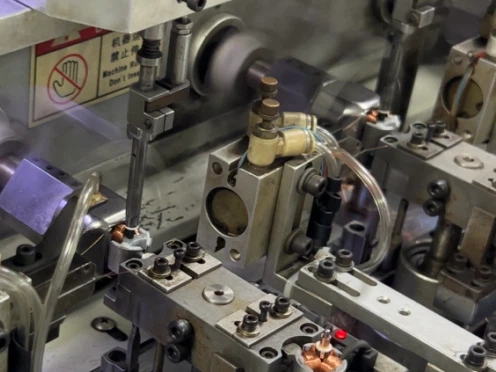
Precise Winding: Automated winding machines ensure accurate coil placement.
Tension Control: Maintains uniform tension during winding to prevent defects.
Optimization: Upgrade to intelligent winding machines with automatic tension adjustment and real-time defect detection.


4. Insulation Treatment
Insulation is crucial for safe motor operation.
Insulation Coating: Coils are immersed in insulation varnish for comprehensive protection.
Drying and Curing: High-temperature ovens cure the varnish to enhance voltage resistance and shock resistance.
Optimization: Use vacuum impregnation technology to ensure complete varnish penetration.
5. Welding and Assembly
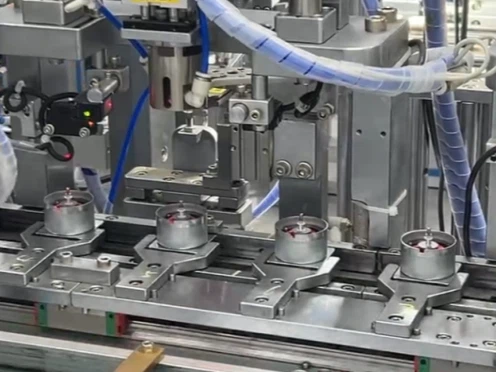
The components are precisely assembled to ensure mechanical strength and electrical connections.
Welding: Secure connections between wires and terminals.
Component Assembly: Includes the installation of stators, rotors, bearings, and ensuring concentricity.
Optimization: Introduce automated welding and assembly technologies to reduce manual errors and improve efficiency.
6. Balancing and Calibration
Vibration and noise control are critical to micro motor performance.
Dynamic Balancing: Adjust rotor weight distribution to minimize vibrations.
Performance Calibration: Ensure motor parameters like speed and current meet specifications.
Optimization: Use high-precision dynamic balancing instruments and AI-driven calibration systems to improve product consistency.
7. Testing and Debugging
Finished products undergo rigorous performance testing and debugging.
Electrical Performance Testing: Includes output power, efficiency, and speed tests.
Environmental Adaptability Testing: Ensures stability under extreme conditions like temperature and humidity.
Optimization: Deploy intelligent testing platforms for automated detection and data analysis.
8. Packaging and Shipping
Final products are cleaned, labeled, and packaged for storage and shipment.
Protective Packaging: Ensures products remain intact during transport.
Labeling: Includes product model, parameters, and batch information for traceability.
Optimization: Integrate automated packaging lines with RFID technology for better traceability and inventory management.
Quality Control and Management
Strict quality control is implemented throughout the production process.
Incoming Material Inspection: Ensures raw materials meet standards.
Process Monitoring: Real-time monitoring of critical production stages reduces defect rates.
Final Product Inspection: Ensures each batch meets customer specifications.
Optimization: Implement Total Quality Management (TQM) and Statistical Process Control (SPC) to enhance product quality and production stability.
Technological Development Trends
Smart Manufacturing: Utilize IoT and big data analytics for intelligent production management.
Green Manufacturing: Use eco-friendly materials and energy-saving processes to reduce carbon emissions.
Modular Design: Enhance product flexibility and maintainability.
Customization Service Advantages of Lihua Motor
Lihua Motor possesses comprehensive production equipment and quality management systems, covering every step from raw material preparation to final product packaging. We actively adopt advanced technologies such as automation, intelligent testing platforms, and green manufacturing processes to ensure superior performance and reliable quality.
With 20 years of production and design experience and strong technical expertise, we offer customized micro motor solutions to meet diverse application and performance requirements, helping our clients maintain a competitive edge in the market.