


Model: BL320 or BL2418
Product Category: Brushless Motor
Out Put: 0.5-5W
Weight: 25g

Brushless DC Motor
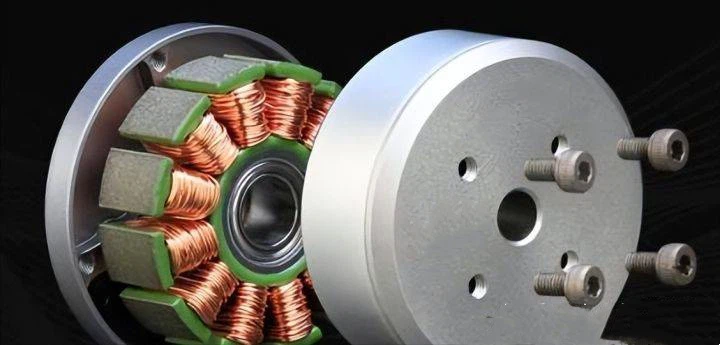
What is mininature DC brushless Motor
A brushless DC electric motor (BLDC), also known as an electronically commutated motor, is a synchronous motor using a direct current (DC) electric power supply. It uses an electronic controller to switch DC currents to the motor windings producing magnetic fields that effectively rotate in space and which the permanent magnet rotor follows.
Unlike conventional brushed motors, brushless motors eliminate carbon brushes and commutators and drive motor rotation through an electronic commutator.
Guangdong Lihua Mechatronics Co.,Ltd. focus on mini dc bushless motor for 20 years, we can provide suitable one-stop solution for you .
High Efficiency
Brushless motors have high efficiency due to the lack of mechanical contact and reduced energy los
Long Life
Without carbon brushes and commutators, avoiding the problem of shortened motor life caused by carbon brush wear and commutator failure.
Low Noise
Brushless motors produce less noise during operation because there is no mechanical contact.
High-precision Control
Brushless motors usually use a digital control system that allows for high-precision speed and position control.
-
![High Speed Brushless Motor]()
-
![Brushless Permanent Magnet Motor]() Brushless Permanent Magnet MotorModel: BL370 or BL2430read more
Brushless Permanent Magnet MotorModel: BL370 or BL2430read more
Product Category: Brushless Motor
Out Put: 0.5-5W
Weight: 25g

Brushless DC Motor Structure
Brushless motor is typical type of DC micro motor,let us learn more it ,getting more information
will choose the best motor for your products.
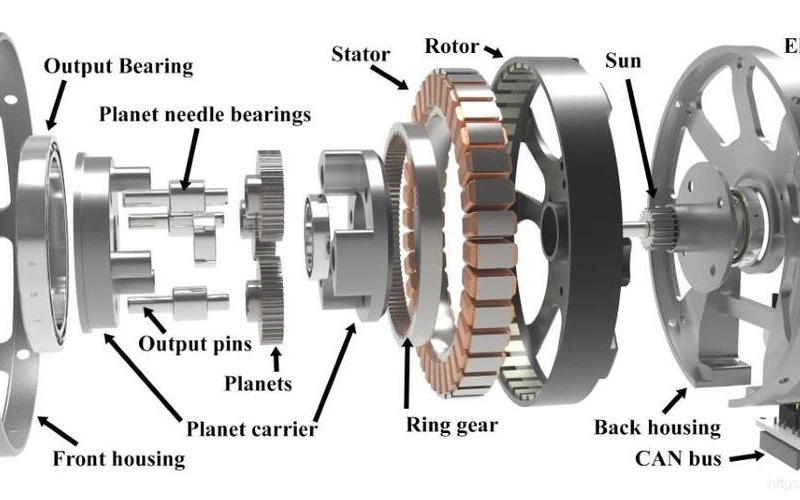
What are the parts of a brushless motor?
The brushless DC motor consists of a permanent magnet rotor, a multi-pole winding stator, and a position sensor. Position sensing according to changes in the rotor position, along a certain order of the stator winding current exchange (that is, detecting the rotor magnetic pole relative to the position of the stator winding, and in the determined position of the location of the position sensing signals generated by the signal conversion circuit to control the signal conversion circuit to control the power switching circuit, according to a certain logical relationship between the winding current switching). The operating voltage of the stator winding is provided by the electronic switching circuit controlled by the output of the position sensor.
Brushless DC Motor Structure
The brushless DC motor consists of a permanent magnet rotor, a multi-pole winding stator, and a position sensor. Position sensing according to changes in the rotor position, along a certain order of the stator winding current exchange (that is, detecting the rotor magnetic pole relative to the position of the stator winding, and in the determined position of the location of the position sensing signals generated by the signal conversion circuit to control the signal conversion circuit to control the power switching circuit, according to a certain logical relationship between the winding current switching). The operating voltage of the stator winding is provided by the electronic switching circuit controlled by the output of the position sensor.
01
permanent magnet rotor
Made of permanent magnet material, capable of providing a continuous magnetic field during motor operation
02
multi-pole winding stator
The stator is the stationary part of the motor and contains multiple windings that are fed from an external power source to produce a varying magnetic field
03
position sensor
Position sensors play a key role in brushless DC motors by switching the current in the stator windings in a sequence that is based on the rotor position.
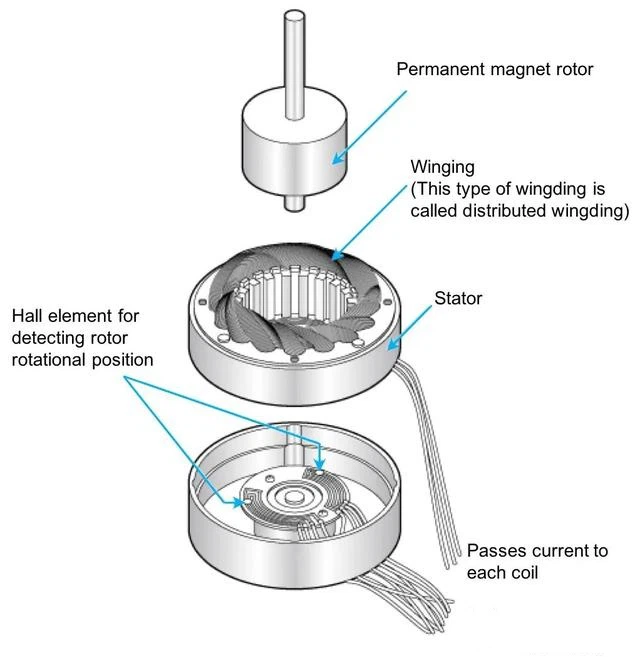
small dc micro brushless motor parts
Permanent Magnet Rotor
The rotor is the rotating part of the motor, which generates the main magnetic field and usually consists of permanent magnets, magnet conductors and support parts.
Permanent magnets and magnet conductors are the core of the magnetic field, before the permanent magnet materials commonly used Alnico and ferrite, now use the use of rare earth permanent magnet materials. Mainly divided into rare earth cobalt and neodymium iron boron, with high remanent magnetism, high magnetic energy product and so on, neodymium iron boron magnetism is better, the price is relatively cheaper.


Multi-pole Winding Stator
The stator is the stationary part of the brushless DC motor, which consists of iron core, armature winding and frame. Generally in order to reduce the stator iron loss, the iron core is often made of stacked silicon steel sheet, the silicon steel sheet is made into a ring-shaped punch with teeth and grooves, and the surface insulation treatment to reduce the eddy current loss. The choice of the number of slots need to consider the number of pole pairs of permanent magnets and the number of phases of the control circuit.
Position Sensor
Position sensor in the brushless DC motor plays a role in detecting the rotor pole position and providing correct phase change information for BLDC control. The position sensor converts the rotor pole position signal into an electrical signal and sends it to the controller, which controls the stator winding to change phase, so that the current in the armature winding changes with the rotor position in a certain order, and then forms a stepping rotating magnetic field through the air gap to drive the permanent magnet rotor to rotate continuously.

difference between brushless DC motor and brushed DC motor
When we choose the motors , we will dout which motors are more suitable for your product? What are the differences between brushless dc motor and brush dc motor? How did I choose dc micro motor ? Let us show the differences between them ?
| products |
 |
 |
| Motor catalogue | DC Bruhsed motor | dC Brushless motor |
|
Principle of operation |
Brush motor adopts mechanical commutation, the magnetic poles do not move and the coil rotates. |
Brushless motors take electronic commutation, the coil does not move, the magnetic poles rotate |
| responsiveness | Fast response and high starting torque | have high starting resistance (inductive), small power factor and relatively small starting torque |
| Operating and braking effects | Smooth starting and braking due to voltage regulation, and smooth operation at constant speeds | Uneven running and high vibration during starting and braking, smooth only when speed is constant |
| control accuracy | Higher control accuracy, control accuracy can reach 0.01mm | No easy to control ,Must be stopped in the desired position by means of a locating pin or limiters |
| cost | More Competitive Price | Higher prices and limited applications |
| anti-interference | Impact on radio equipment | Without brush Significantly reduces electrical spark interference with remote-controlled radio equipment |
| Noice | Have noice comparing Brushless | Runs smoothly and will be much quieter |
| Life | Long Life | Longer life, low maintenance |
*The above data are from internal test results and do not represent accurate data.
Benefits of Brushless DC Motor
Long lifespan
A brushed motor requires direct contact between the brushes and the commutator whereas brushless motors have fewer contact parts, for example there is no friction between the brushes and commutator, therefore require less maintenance through wear and tear. This means they have a longer life span than the average DC brushed motor.
Safer
Brushed motors have a tendency to spark due to friction with the brushes which can be a health and safety hazard in some situations. This is not a concern when using a brushless DC motor.
Efficient
Brushes in a brushed motor can reduce the efficiency of the motor whereas brushless motors work on 85-90% efficiency which can end up being a cost-effective option for your business.
Quiet operation
The lack of means brushes that brushless motors are somewhat quieter than their brushed counterparts and produce less electrical noise and interference making them more suited to some industries such as medical, the food industry or other noise-sensitive industries.
Applications of Brushless DC Motor

Transport
Brushless motors are found in electric vehicles, hybrid vehicles, personal transporters, and electric aircraft. Most electric bicycles use brushless motors that are sometimes built into the wheel hub itself, with the stator fixed solidly to the axle and the magnets attached to and rotating with the wheel. The same principle is applied in self-balancing scooter wheels. Most electrically powered radio-controlled models use brushless motors because of their high efficiency.
Cordless Tools
Brushless motors are found in many modern cordless tools, including some string trimmers, leaf blowers, saws (circular and reciprocating), and drills/drivers. The weight and efficiency advantages of brushless over brushed motors are more important to handheld, battery-powered tools than to large, stationary tools plugged into an AC outlet.


Heating And Ventilation
There is a trend in the heating, ventilation, and air conditioning (HVAC) and refrigeration industries to use brushless motors instead of various types of AC motors. The most significant reason to switch to a brushless motor is a reduction in power required to operate them versus a typical AC motor. In addition to the brushless motor's higher efficiency, HVAC systems, especially those featuring variable-speed or load modulation, use brushless motors to give the built-in microprocessor continuous control over cooling and airflow.
Aeromodelling
A microprocessor-controlled BLDC motor powering a micro radio-controlled airplane. This external rotor motor weighs 5 g and consumes approximately 11 W. Brushless motors have become a popular motor choice for model aircraft including helicopters and drones. Their favorable power-to-weight ratios and wide range of available sizes have revolutionized the market for electric-powered model flight, displacing virtually all brushed electric motors, except for low powered inexpensive often toy grade aircraft.[citation needed] They have also encouraged growth of simple, lightweight electric model aircraft, rather than the previous internal combustion engines powering larger and heavier models. The increased power-to-weight ratio of modern batteries and brushless motors allows models to ascend vertically, rather than climb gradually. The low noise and lack of mass compared to small glow fuel internal combustion engines is another reason for their popularity.

Brushless Solution of Brushless DC Motor


In brushless DC motors, an electronic controller replaces the brush commutator contacts. An electronic sensor detects the angle of the rotor and controls semiconductor switches such as transistors that switch current through the windings, either reversing the direction of the current or, in some motors turning it off, at the correct angle so the electromagnets create torque in one direction. The elimination of the sliding contact allows brushless motors to have less friction and longer life; their working life is limited only by the lifetime of their bearings. A typical brushless motor has permanent magnets that rotate around a fixed armature, eliminating problems associated with connecting current to the moving armature. An electronic controller replaces the commutator assembly of the brushed DC motor, which continually switches the phase to the windings to keep the motor turning. The controller performs similar timed power distribution by using a solid-state circuit rather than the commutator system.
Brushless motors offer several advantages over brushed DC motors, including high torque to weight ratio, increased efficiency producing more torque per watt, increased reliability, reduced noise, longer lifetime by eliminating brush and commutator erosion, elimination of ionizing sparks from the commutator, and an overall reduction of electromagnetic interference (EMI). With no windings on the rotor, they are not subjected to centrifugal forces, and because the windings are supported by the housing, they can be cooled by conduction, requiring no airflow inside the motor for cooling. This in turn means that the motor's internals can be entirely enclosed and protected from dirt or other foreign matter.
Brushless motor commutation can be implemented in software using a microcontroller, or may alternatively be implemented using analog or digital circuits. Commutation with electronics instead of brushes allows for greater flexibility and capabilities not available with brushed DC motors, including speed limiting, microstepping operation for slow and fine motion control, and a holding torque when stationary. Controller software can be customized to the specific motor being used in the application, resulting in greater commutation efficiency. The maximum power that can be applied to a brushless motor is limited almost exclusively by heat; too much heat weakens the magnets and damages the windings' insulation.
When converting electricity into mechanical power, brushless motors are more efficient than brushed motors primarily due to the absence of brushes, which reduces mechanical energy loss due to friction. The enhanced efficiency is greatest in the no-load and low-load regions of the motor's performance curve. Environments and requirements in which manufacturers use brushless-type DC motors include maintenance-free operation, high speeds, and operation where sparking is hazardous (i.e. explosive environments) or could affect electronically sensitive equipment.
The construction of a brushless motor resembles a stepper motor, but the motors have important differences due to differences in implementation and operation. While stepper motors are frequently stopped with the rotor in a defined angular position, a brushless motor is usually intended to produce continuous rotation. Both motor types may have a rotor position sensor for internal feedback. Both a stepper motor and a well-designed brushless motor can hold finite torque at zero RPM.
Certifications


Our Factory
Our team is composed of passionate and dedicated individuals who are committed to delivering the best possible experience to our clients. Facing trouble we will have a effective communication, work together in a cooperative and productive manner, leveraging each other's strengths and abilities, accept diverse solution and way. In order to provide the high quality service and best solution. We have a complete production system for DC micro motor, it concludes 19 Production lines, Purchasing, R&D, Quality Inspection, Transportation(in short distance in China), Sales departments. Quickly reaction, 100% original manufacture. Thus we have serviced for more than 300+ retailers, many DC motors were sold all round the word factories. And won the high praise from them, keep the long win-win relationship.


FAQ
We're professional brushless dc motor manufacturers and suppliers in China, specialized in providing high quality customized service. If you're going to buy discount brushless dc motor for sale, welcome to get quotation from our factory. For price consultation, contact us.
24v brushless dc motor, bldc brushless motor, small brushless motor